

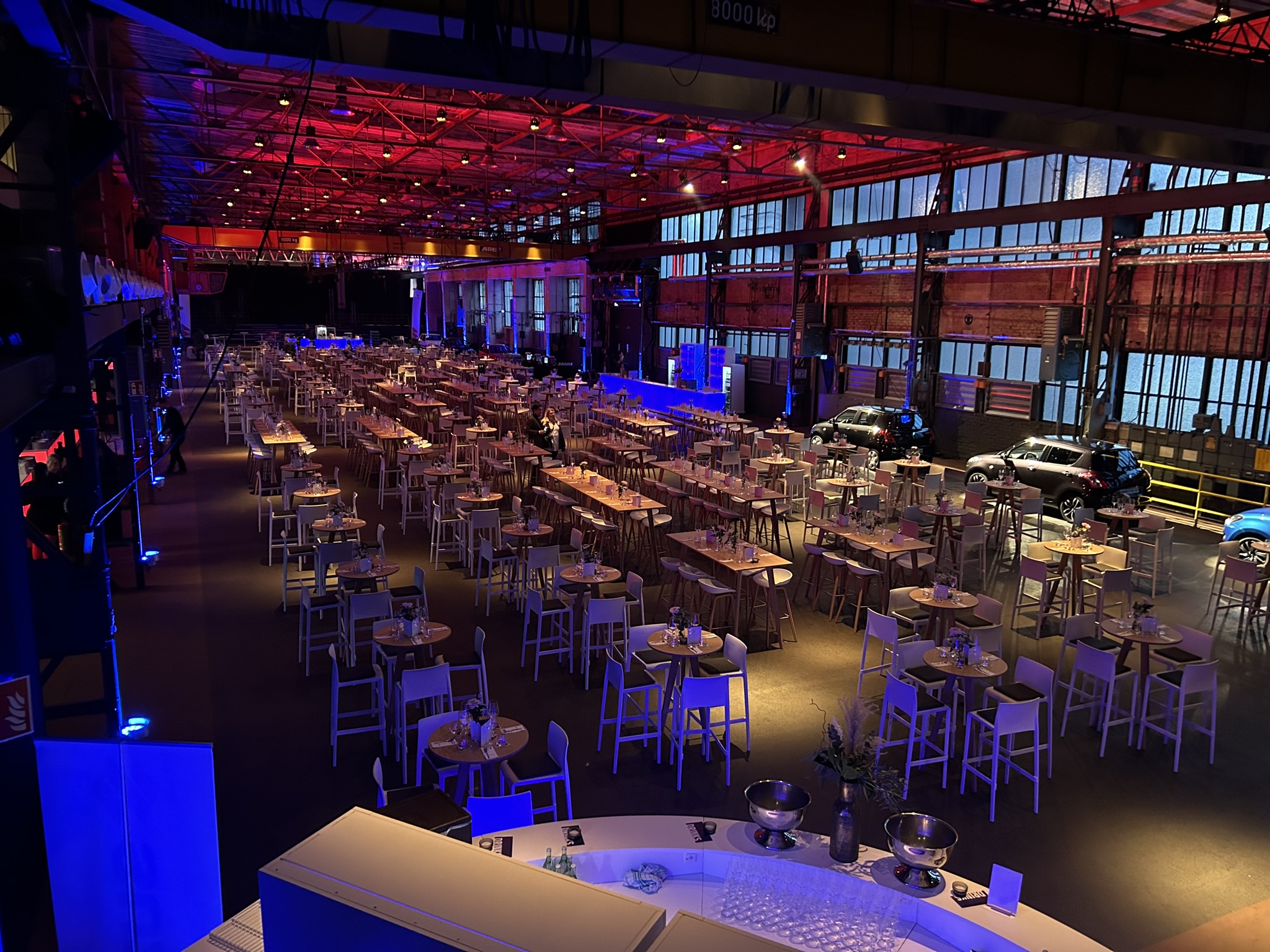
As multinational enterprises expand their global footprints, hosting high-profile corporate summits across international borders has transitioned from a sporadic luxury to a strategic imperative. Whether bringing North American leadership and European enterprise clients together in London, Paris, Munich, Zurich, or Amsterdam, a successful transatlantic conference cements market leadership, accelerates international deal velocity, and cultivates unified organizational culture.
However, executing a corporate event across international borders involves far more than booking flights and reserving hotel ballrooms. US corporate planning teams frequently discover that European commercial frameworks, labor regulations, contractual customs, and hospitality standards operate under vastly different principles than domestic American venues. Attempting to replicate an American conference playbook in Europe without localized cross-border event production expertise frequently results in unforeseen tax liabilities, cultural dissonance, and operational friction.
Cross-Border Corporate Event Planning demands an integrated operational bridge. A sophisticated partner applies turnkey vendor procurement to pair the strategic ambition, narrative pacing, and technological standards of premier US corporate conferences with the refined hospitality, regulatory compliance, and architectural elegance of Europe premier venues.
Contracting European Venues: Structural Realities American Planners Encounter
American planners reviewing European venue proposals often experience immediate surprises regarding how spaces are leased, staffed, and billed. Understanding these structural distinctions is vital to protecting event budgets and ensuring operational viability:
• Room Rental Fees vs. Food & Beverage Minimums: In the United States, luxury hotels frequently reduce or waive meeting space rental fees if the client commits to substantial sleeping room blocks and high food and beverage thresholds. In Europe, properties operate on distinct economic models: venues charge firm room hire fees for physical space, while catering, staging, and technical services are contracted as separate, itemized agreements.
• European Labor Directives and Rest Mandates: Labor regulations across the European Union and the United Kingdom strictly enforce statutory working hours and mandatory rest periods. Under European working time directives, technical crews and venue staff are legally entitled to eleven consecutive hours of uninterrupted rest between shifts. If an evening rehearsal concludes at 11:00 PM, that crew cannot legally return to work until 10:00 AM the following morning. Production schedules must be designed with realistic, compliant shift rotations.
• Strict Dark-Day and Setup Policies: While US properties may grant complimentary load-in access the evening prior if a ballroom is vacant, European venues enforce strict hourly access charges. Securing early load-in access for complex staging or rehearsal requires formally leasing the venue for a dedicated setup day.
• Municipal Sustainability and Eco-Directives: Major European business centers enforce rigorous environmental mandates. Cities like Amsterdam, Zurich, and Munich require events to minimize single-use materials, verify carbon-offset initiatives, and partner with local food rescue programs. Production designs must utilize reusable modular architecture and recyclable environmental graphics.
Strategic Matrix: US Domestic Conferences vs. European Transatlantic Productions
Navigating an international program requires understanding how core operational components shift when crossing the Atlantic. The comparison below details the operational distinctions between domestic US conventions and European transatlantic events:
| Operational Dimension | US Domestic Convention Market | European International Market |
| Contracting Framework | Uniform Commercial Code with standard sliding-scale room attrition clauses | Local civil law agreements with strict performance commitments and limited unilateral cancellation |
| Taxation & Budget Impact | State and local sales taxes (typically 6%–10%) billed directly onto final hotel master invoice | Value Added Tax (VAT) typically 7.7% to 20% requiring formal international recovery filings where eligible |
| Catering & Hospitality Culture | Fast-paced 30-to-45-minute buffet services and grab-and-go morning stations | Elevated, multi-course seated luncheons and artisanal espresso breaks emphasizing networking |
| Freight & Equipment Transport | Domestic ground freight carriers operating under standard bills of lading | Bonded international customs manifests managed under temporary duty-free ATA Carnets |
| Data Privacy & Registration | Standard corporate opt-in/opt-out consent mechanisms for attendee data | Strict GDPR compliance requiring explicit consent, audited badge scanning, and privacy notices |
| Multilingual Staging & Audio | Predominantly monolingual English staging and single-channel audio delivery | Multilingual stage direction, ISO-certified simultaneous interpretation booths, and multi-channel feeds |
Reclaiming Up to 20% of Your Budget: Navigating Foreign VAT Recovery Mechanisms
One of the most significant budget opportunities evaluated by North American corporate finance teams is the potential recovery of Value Added Tax (VAT). In European host destinations, VAT is levied on venue leasing, production staging, catering, ground logistics, and hotel accommodations, with standard rates typically ranging between 7.7% and 20% depending on the host country.
For example, on an illustrative 300,000-dollar European summit budget, VAT expenditures can represent approximately 45,000 to 60,000 dollars in paid taxes. Many corporate finance departments initially treat this as an unavoidable cost of international operations. However, depending on the specific host jurisdiction, expenditure categories, and local national tax rules, non-resident corporate entities can often reclaim a substantial portion of these event-related VAT expenses under the European Union Thirteenth Directive and reciprocal non-EU bilateral treaties.
Because VAT recovery depends strictly on local tax authority criteria, eligibility is closely tied to proper invoice administration from the earliest supplier engagements. Every European supplier invoice must be formally issued to the exact legal corporate entity name of the client, display the registered corporate address, and include the vendor verified national tax identification number. Partnering with an international event agency helps ensure supplier contracts and billing documentation comply with these statutory requirements, allowing corporate accounting teams to pursue applicable recovery filings effectively.
International Freight, Duty-Free Movement, and the ATA Carnet Protocol
Transporting proprietary demonstration hardware, prototype technology, and custom brand assets across international borders requires meticulous customs clearance. Shipping event cargo on standard commercial invoices can result in shipments being held at airport customs, triggering unexpected import duties and schedule delays:
• The ATA Carnet as Cargo Passport: An ATA Carnet is an internationally recognized customs document that permits duty-free, tax-free temporary importation of commercial goods into over eighty countries. Every piece of equipment, road case, display monitor, and hardware prototype must be itemized on the Carnet manifest with precise serial numbers, country of origin, and replacement values.
• Separating Consumables from Capital Assets: ATA Carnets strictly apply to non-consumable equipment that will return to the country of origin. Branded marketing collateral, printed brochures, and promotional gifts cannot travel under a Carnet. These items must be sourced locally through European print partners or shipped under separate, duty-paid commercial entries.
• Strategic Local Sourcing of Staging Infrastructure: To optimize sustainability and logistics budgets, an experienced agency sources core physical staging, LED displays, lighting rigs, and furniture locally through vetted European production networks, reserving international air freight strictly for proprietary brand assets and executive demo hardware.
Elevating the Global Guest Journey: Circadian Pacing, Multilingual Flow, and European Gastronomy
When producing a transatlantic conference, attendee experience design must incorporate immersive brand environments that account for the physical and cultural realities of international business travel. A program that ignores these dynamics risks disengaging its most valuable delegates:
• Circadian Agenda Engineering: Executives flying from North America to Europe cross six to nine time zones, resulting in significant cognitive fatigue during early morning hours. Opening the first day with dense, 8:00 AM technical keynotes is counterproductive. Elite agencies schedule late-morning executive roundtables on Day One, supported by daylight-filled foyers and active networking breaks, allowing travelers to acclimate naturally.
• The European Culinary Experience: In European business culture, dining is an essential venue for relationship building. Compressed thirty-minute sandwich buffets are viewed as transactional and unrefined. Designing seated 75-minute culinary luncheons featuring locally sourced regional cuisine, curated wine pairings for evening receptions, and dedicated barista coffee stations communicates respect for international delegates and creates a fertile environment for strategic discussions.
• Flawless Multilingual Infrastructure: For pan-European gatherings where attendees speak multiple languages, seamless communication is essential. Professional event agencies deploy soundproof ISO-standard interpretation booths, digital multi-channel infrared headsets, and real-time multilingual AI captioning, ensuring every delegate participates fully in keynote dialogues.
Cross-Border Data Governance, Privacy Clearances, and On-Site Compliance
Producing events within the European Union mandates strict adherence to the General Data Protection Regulation (GDPR). Enterprise planning teams must implement transparent attendee privacy practices across all on-site touchpoints:
• Compliant Registration and Lead Retrieval: Attendee registration platforms must feature separate, unbundled consent checkboxes for event communication and sponsor marketing. On the exhibition floor, badge scanners must prompt attendees to explicitly consent before sharing contact credentials with individual sponsors.
• Photography and Media Notifications: European privacy regulations recognize individuals’ statutory rights regarding their personal image. Event organizers must post prominent visual notices informing delegates that session filming is underway and provide designated seating areas or discreet lanyards for guests who request not to be photographed.
Frequently Asked Questions Regarding Transatlantic Corporate Event Production
• How far in advance should an enterprise begin planning a European conference: Given high demand for premier convention hotels and historic venues in gateway cities like London, Paris, and Zurich, venue sourcing should ideally begin nine to twelve months prior to the target date. This allows sufficient lead time for venue contract negotiation, VAT documentation alignment, and attendee international travel coordination.
• Does a US company need an established European subsidiary to host an event in Europe: No. American corporate entities can contract directly with European venues and suppliers as foreign commercial buyers. However, payment terms frequently mandate international SWIFT wire transfers, and contracts must clearly establish governing legal jurisdictions.
• How does an international agency handle on-site coordination between US and European teams: The agency deploys a bilingual production management team that bridges time zones. An American executive producer interfaces directly with client corporate leadership, while an on-site European operations director manages local venue engineers, municipal authorities, and regional suppliers.
• What are the most effective European gateway cities for corporate summits: Cities with exceptional international flight connectivity, premier luxury hotel capacity, and sophisticated event infrastructure include London, Paris, Amsterdam, Munich, Frankfurt, and Zurich. Each market offers unique advantages depending on your industry focus and delegate geography.
Work With Vision Spotlight
Planning a corporate event between the US and Europe? Let Vision Spotlight bridge the markets, suppliers, logistics and guest experience for you. Let’s start planning.